
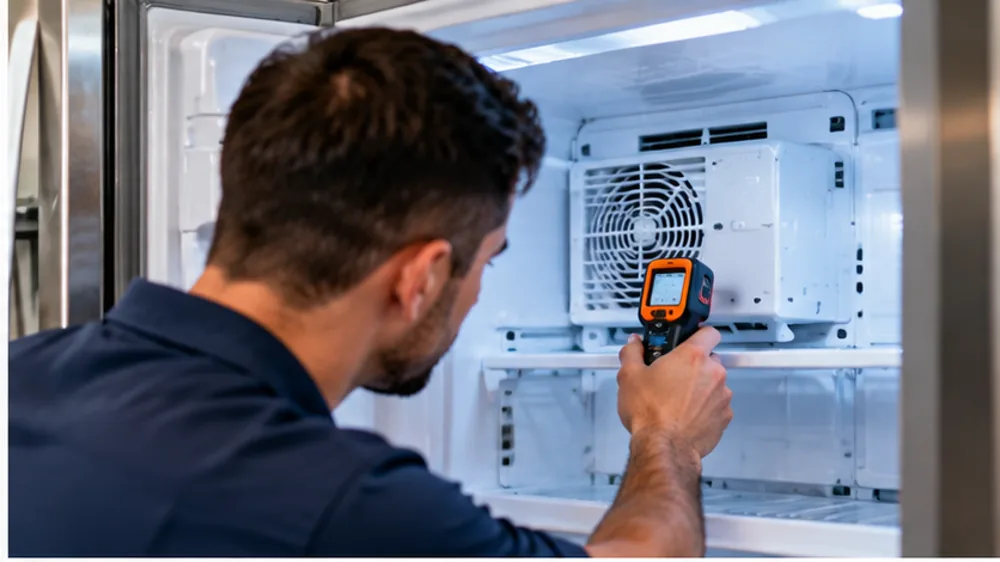
Freezer temperature and frost problems
Freezer faults often show up as food that will not stay frozen, heavy frost, poor airflow, or an unusually long run time. Because freezer performance also affects many refrigerator models, the complete cooling pattern matters.
Before you call: Have the appliance brand/model, the main symptom, and any error code or unusual sound ready if available.
Common signs connected with this problem
- Temperature is outside the normal range or changes unexpectedly.
- The refrigerator runs longer than usual or cycles differently.
- There is frost, moisture, water, unusual noise, or poor ice production.
- A door, dispenser, or control does not behave normally.
How diagnosis usually starts
A useful service call begins with the symptom pattern, then checks the components that could reasonably create it. The exact inspection depends on the refrigerator design and the problem. Avoid replacing parts based only on a single symptom because several faults can look similar.
What to have ready
- Brand and model number, if accessible.
- What changed and when the issue began.
- Whether the freezer is affected too.
- Any water, frost, noise, or error-code details.
Frequently asked questions
Why is my freezer frosting up?
Frost can be related to door-seal gaps, airflow, defrost components, humidity, or other cooling issues. The pattern and location of frost are useful clues.
Why is the freezer warm but the refrigerator cold?
Airflow, evaporator, fan, sensor, or control problems can affect freezer performance. The model and symptom pattern determine what should be tested.
Should I move food from a warm freezer?
Yes, if food is no longer being kept safely frozen, move it to another functioning freezer or suitable cold storage as appropriate.
Need help with freezer repair?
Call Appliance Repair Pros at (669) 284-5945 for Campbell-area refrigerator repair assistance.
Call Now